

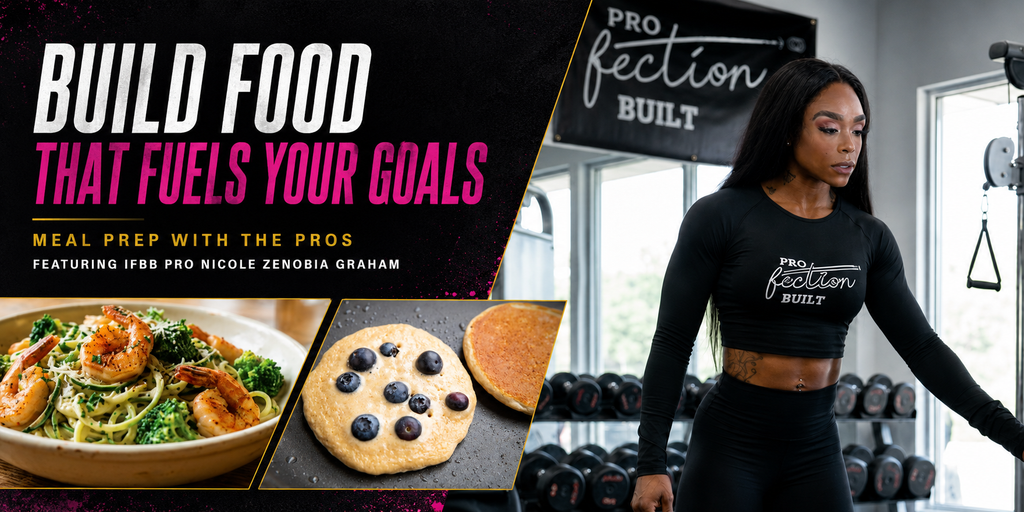
With IFBB Pro Nicole Zenobia Graham of Profection Coaching
When most people think about improving their nutrition, they focus on what they need to remove: fewer sweets, fewer restaurant meals, fewer snacks, and fewer of the foods they enjoy. But IFBB Pro and Profection Coaching founder Nicole Zenobia Graham believes lasting progress begins with something different—creating a supportive food environment that makes healthier choices easier, more enjoyable, and sustainable.
For Nicole, nutrition is not simply a “diet.” It is a lifestyle, and that lifestyle should begin from a place of honesty rather than judgment.
Having faced her own struggles with an eating disorder, Nicole understands how complicated a person’s relationship with food can become. That experience influences how she coaches both competitors and lifestyle clients today. She wants clients to know they have a safe space to talk openly about cravings, sweets, convenience foods, emotional challenges, and the obstacles that make consistency difficult.
The first question is not, “Why can’t you stick to the plan?” It is, “What is making the plan difficult to follow—and how can we make it work better for you?”
Healthy Food Should Still Taste Good
One of the biggest misconceptions Nicole encounters is the belief that nutritious food must be plain, steamed, boiled, or completely unseasoned. She reminds clients that they can use herbs, spices, low-calorie seasonings, and flavorful sauces to create meals they genuinely enjoy.
Healthy eating does not have to mean another container of dry chicken and bland vegetables.
“We’ve gotten so down to the science when it comes to calories and macros that you can actually have people enjoy their nutrition,” Nicole explains.
As long as the ingredients support a person’s goals and work well for their body, there are countless ways to add variety and flavor. A well-designed nutrition plan should remove the guesswork while still including foods the client can look forward to eating.
That enjoyment matters because consistency becomes much easier when every meal does not feel like a punishment.
Make Mealtime Feel Like a Meal
A supportive food environment also includes how and where you eat.
Meal-prep containers are convenient when you are working, traveling, or moving through a busy day, but you do not have to eat every meal standing at the counter or straight from a plastic container. When possible, put your food on a plate, sit down, slow down, and allow yourself to enjoy it.
Food is meant to be nourishing, but it can also be satisfying and enjoyable. Feeling guilty simply because you enjoy a meal can create an unhealthy relationship with eating. Particularly for lifestyle clients, the goal is not to live with the restrictions of a competitive bodybuilder. The goal is to develop habits that support better health while still leaving room for real life.
Plan for Life Outside Your Kitchen
Family dinners, celebrations, and restaurant meals are part of life. Rather than avoiding them entirely, Nicole teaches clients how to plan ahead.
If a client knows where they will be eating, they can review the restaurant’s menu before arriving and look for an option that closely matches the calories and macronutrients in their planned meal. Nicole has even shown clients how to use AI as a planning tool: provide the nutritional targets for the meal, identify the restaurant, and ask for menu options that come closest to those targets.
AI-generated estimates should still be checked against the restaurant’s official nutrition information whenever it is available, but the tool can provide a helpful starting point.
This approach allows clients to participate instead of sitting at the table watching everyone else eat. They can enjoy time with the people they love, make an informed choice, and return to their usual routine with the next meal.
One restaurant meal does not have to become an entire weekend of abandoning your goals.
Remember Your “Why”
Not everyone around you will understand your goals. Friends and family may offer tempting foods, question your choices, or insist that “just a little won’t hurt.”
In those moments, Nicole encourages clients to return to their why.
Why did you decide to make this change? Why did you ask for help? What would improving your health, strength, confidence, or quality of life mean to you?
“If it doesn’t challenge you, it’s not going to change you,” Nicole says.
Motivation will not always be there. That is when discipline—and a clear connection to your reason for starting—must take over. Progress is built by reaching small goals consistently, not by waiting until every circumstance feels easy.
Give Yourself Grace
Perhaps Nicole’s most important advice is also the simplest: remember that you are human.
A lifestyle change is new, and you should not expect yourself to execute it perfectly from the beginning. Some weeks will be easier than others. You may make a choice that does not support your goal as well as you intended. That does not mean you have failed or need to give up.
Give yourself grace, learn from the moment, and make your next choice a supportive one.
Small steps create momentum. Momentum builds consistency. Over time, those repeated choices create meaningful, lasting change.
Nicole’s Featured Recipe
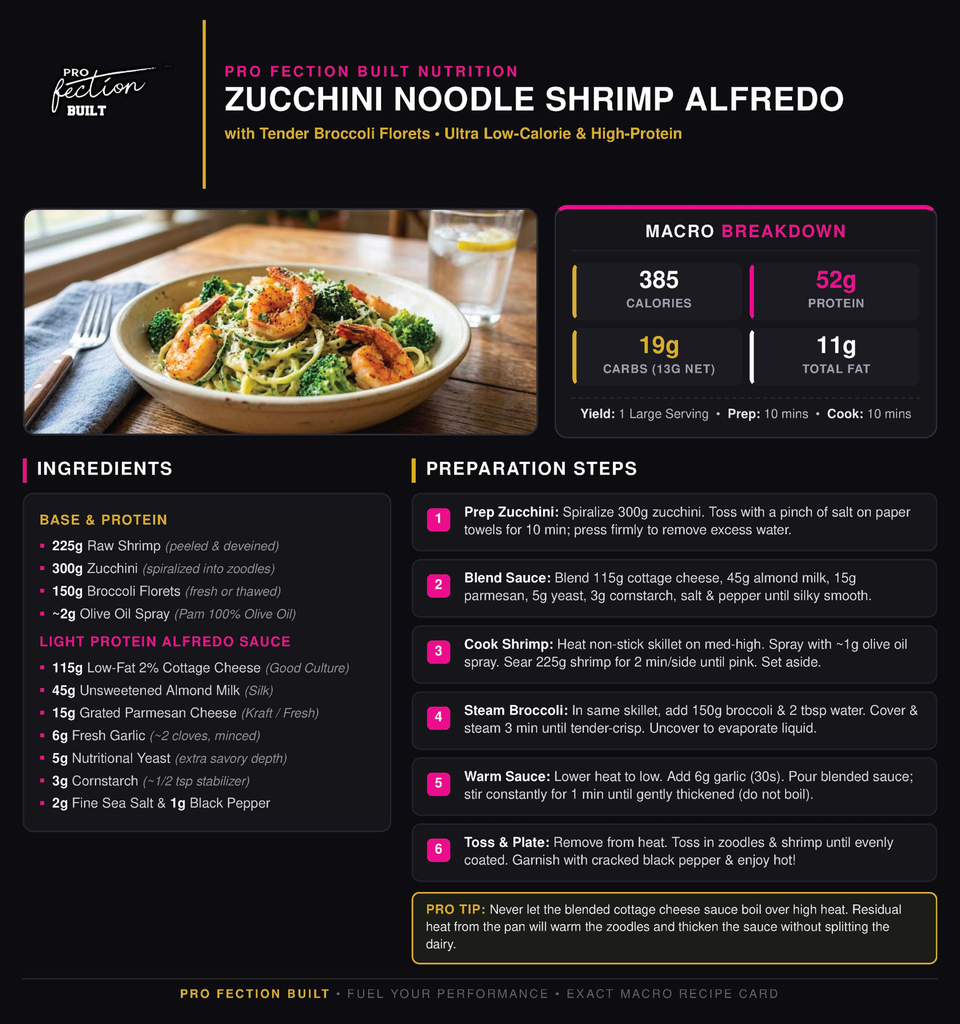
Zucchini Noodle Shrimp Alfredo with Broccoli
This satisfying, high-protein meal proves that comfort food can still support your goals. Tender shrimp, zucchini noodles, broccoli, and a creamy cottage-cheese Alfredo sauce create a flavorful meal with an impressive nutritional profile.
The sauce combines low-fat cottage cheese, unsweetened almond milk, Parmesan, garlic, nutritional yeast, cornstarch, salt, and pepper. Blending the ingredients creates a smooth, protein-rich Alfredo sauce without the heaviness of a traditional cream-based recipe.
A Sweet Start: Blueberry-Oat Pancakes
For clients who prefer something sweet at breakfast, Nicole suggests blending oats with egg whites, cinnamon, a low-calorie sweetener, and blueberries to create a simple pancake batter.
Instead of traditional syrup, warm additional blueberries in the microwave and gently mash them into a naturally sweet fruit topping. The same basic idea can be adapted with apples or pumpkin for a seasonal variation.
It is another reminder that supporting your goals does not require giving up every food you enjoy. Sometimes it simply requires learning a new way to prepare it.
Create an Environment That Moves You Forward
A supportive food environment is not defined by a perfectly organized refrigerator or a pantry without a single tempting food. It is an environment built around preparation, flavor, flexibility, awareness, and self-respect.
Keep nourishing options available. Prepare meals you look forward to eating. Plan ahead when dining out. Surround yourself with people who respect your goals. Stay connected to your why—and extend yourself grace as you learn.
You do not need perfection to make progress. You need a plan you can live with, choices that move you forward, and the willingness to begin again with your very next meal.
To learn more about Nicole Zenobia Graham and her coaching services, visit ProfectionCoaching.com.

Follow us
@southernmuscleguide