
Beginning your weight training journey can feel overwhelming, but a strong foundation starts with mastering the basics. By focusing on proper technique, smart progression, and recovery, you’ll set yourself up for long-term success while reducing the risk of injury. Below are key principles to help you get started with confidence.
Optimize Your Effort
Warm Up First
Spend 5–10 minutes on light cardio—such as brisk walking, cycling, or rowing—to increase blood flow and prepare your muscles and joints for training.
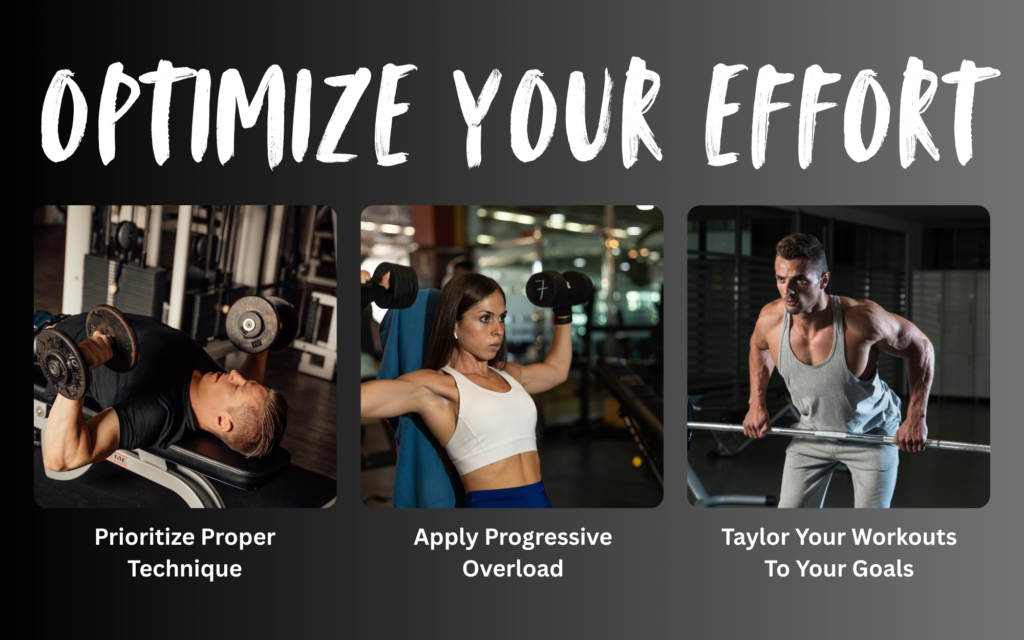
Prioritize Proper Technique
Control the weight at all times. Avoid using momentum, and never push through sharp or unusual pain. Good form not only protects you from injury but also ensures the muscles you’re targeting are doing the work.
Apply Progressive Overload
To continue improving, your muscles need gradually increasing challenges. Over time, this can mean:
- Adding weight
- Increasing reps or sets
- Reducing rest time
Small, consistent improvements add up.
Tailor Your Workouts to Your Goals
Different training styles support different goals. Choose weights that match your purpose while maintaining good form.
- Strength (1–8 reps): Heavier weights, longer rest periods
- Muscle Growth / Size (8–12 reps): Moderate weights with controlled tempo
- Muscle Endurance / Fat Loss Support (12–20 reps): Lighter weights, shorter rest periods
No matter the goal, technique always comes first.
Practical Training Tips
Focus on Compound Lifts
Exercises like squats, deadlifts, presses, rows, and pull-ups work multiple muscle groups at once. These movements build strength efficiently and form the backbone of most effective programs.
Vary Intensity
Progress isn’t only about lifting heavier. You can also:
- Slow down your reps to increase time under tension
- Add pauses or isometric holds
- Use supersets or controlled tempos
Listen to Your Body
Rest days are essential. Muscles grow and recover when you’re not training, so schedule recovery just as intentionally as workouts.
Support Training with Nutrition
Eating enough protein helps repair muscle tissue and supports recovery. Pair this with balanced meals and adequate hydration for best results.
Full Body Beginner Push–Pull Workout
This workout introduces balanced upper-body training using controlled tempos and varied intensity.
Structure:
4 sets for each exercise
- Set 1: Warm-up set (lighter weight)
- Set 2: Standard tempo (2 seconds down / 2 seconds up)
- Set 3: Isometric holds (pause 3–5 seconds during the movement)
- Set 4: Slow eccentrics (take 3–5 seconds to lower the weight)
Exercises
- Flat Bench Press – Dumbbells, lying position, both arms
- Bent-Over Row – Barbell, wide grip
- Overhead Press – Seated, dumbbells, both arms
- Lat Pulldown – Seated cable machine, wide grip
- Goblet Squat – Dumbbell or kettlebell held at chest
- Romanian Deadlift (RDL) – Dumbbells or barbell
- Reverse Lunge (or Split Squat) – Bodyweight or dumbbells
- Glute Bridge / Hip Thrust – Bodyweight or dumbbell across hips
Rest 60–90 seconds between sets and focus on smooth, controlled movement.
Optional Add-On
5) Calf Raises – Bodyweight or dumbbells
Final Thoughts
Starting weight training isn’t about lifting the heaviest weights—it’s about learning how to move well, progress safely, and build habits that last. Master the fundamentals, stay consistent, and let strength develop over time. Your future progress depends on the foundation you build today.
Follow us
@southernmuscleguidesouthernmuscleguide
Assisting your success with digital marketing.
Southern Natural Showdown eblast link: https://conta.cc/4i7r1OJ