

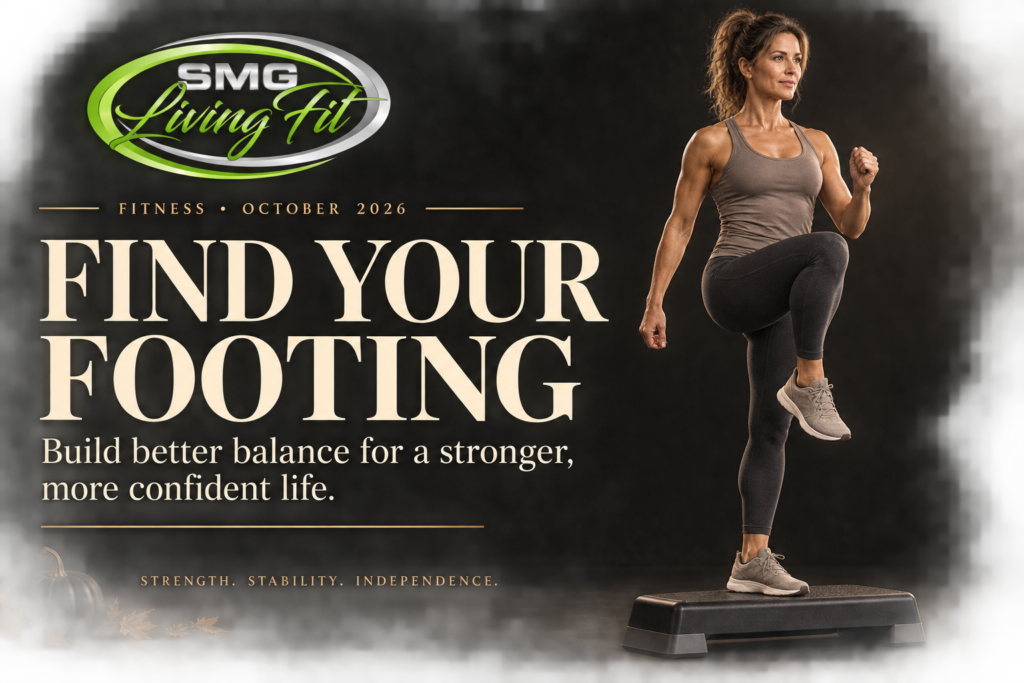
Stepping off a curb with your hands full. Pulling on a pair of pants. Turning around when someone calls your name. These everyday movements have something in common: they rely on balance.
We often give strength, endurance, and flexibility a place in our fitness routines while leaving balance to take care of itself. This October, our word of the month invites us to give it some attention. A few intentional minutes can create space for a skill we use throughout the day.
Balance deserves a place in your workout.
Practicing balance means spending time controlling your position as you stand, shift your weight, and move. Simple exercises at home can help support balance and mobility, and they need very little equipment. The National Health Service recommends practicing balance exercises at least twice a week, building up gradually. NHS balance guidance
There is a mindset element to this practice, too. Slow movement asks us to pay attention. Instead of rushing through repetitions, we notice where our weight rests, how much support we need, and when it is time to reset.
The goal is controlled movement you can repeat with confidence. Using a countertop for support is a useful way to begin.
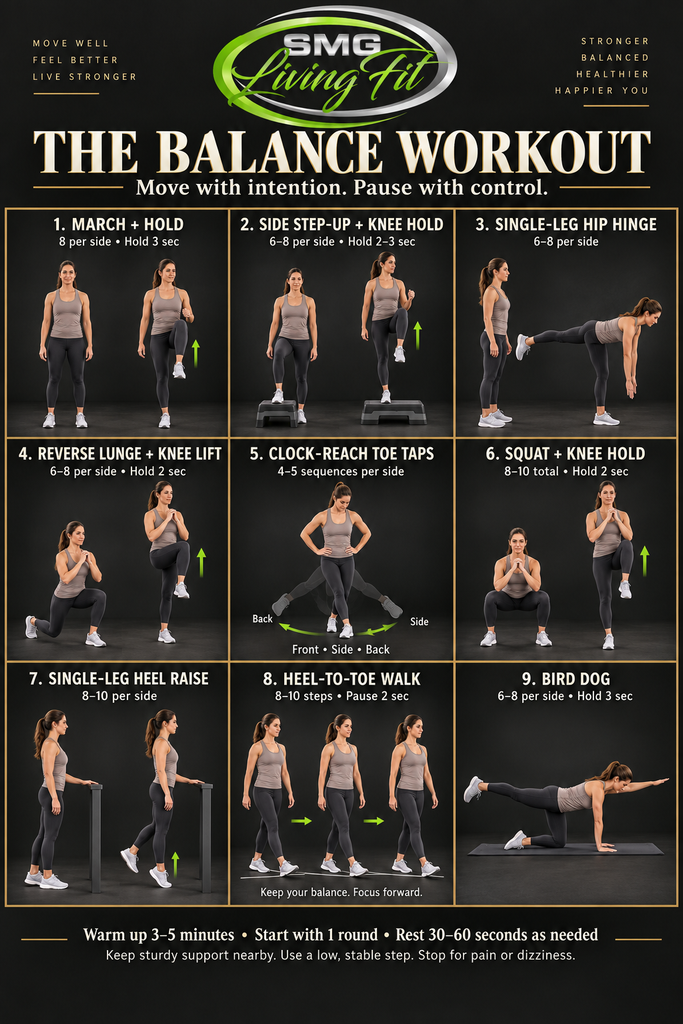
The Find Your Footing Workout
This workout combines single-leg control, purposeful movement, and steady holds. It’s designed for readers who are comfortable with basic balance exercises and ready for the next challenge.
Equipment: A low, stable exercise step, a fixed countertop or railing, and an exercise mat. Begin with body weight.
Your plan: Practice twice a week on nonconsecutive days. Warm up for 3–5 minutes with walking, marching, and gentle side steps. Start with one round, allowing about 20 minutes, and rest 30–60 seconds between exercises as needed. Build toward two rounds as your control and endurance improve.
Keep support within reach throughout the standing exercises.
1. Slow March with Knee Hold
8 repetitions per side
Stand tall and lift one knee to a comfortable height. Hold for three seconds without leaning backward, then lower slowly and switch sides. Keep your hips level and your standing knee soft.
Adjust it: Use fingertip support or reduce the height of the knee lift.
2. Side Step-Up with Knee Lift and Hold
6–8 repetitions per side
Stand beside a low exercise step with your nearest foot fully on it. Press through that foot to rise, bringing the opposite knee forward and up. Balance for two to three seconds, then lower the lifted foot slowly to the floor. Finish your repetitions before switching sides.
Keep your supporting knee aligned with your toes and use a railing or fixed support.
Adjust it: Begin with a side step-up, bringing both feet onto the platform before stepping down. Add the knee lift when steady.
3. Single-Leg Hip Hinge
6–8 repetitions per side
Shift your weight onto one leg and soften that knee. Hinge at your hips, sending the opposite leg behind you as your torso tips forward. Keep your back long and hips facing the floor. Return slowly to standing.
A small, controlled movement is enough—you do not need to reach the floor. This body-weight variation uses the same basic movement pattern as a single-leg Romanian deadlift. ACE exercise reference
Adjust it: Keep your back toes lightly on the floor in a kickstand position.
4. Reverse Lunge to Knee Lift
6–8 repetitions per side
Step one foot backward and lower into a comfortable lunge. Push through your front foot to stand, then bring the back leg forward into a knee lift. Hold for two seconds before stepping back again.
Move deliberately, keeping your front knee aligned with your foot.
Adjust it: Hold a countertop, use a shallow lunge, and briefly place both feet on the floor before lifting the knee.
5. Clock-Reach Toe Taps
4–5 sequences per side
Imagine standing in the center of a clock. Balance on your left leg while lightly tapping your right toes forward, out to the side, and behind you. Return to center between taps. Those three taps equal one sequence.
Keep most of your weight on the standing leg and your pelvis steady.
Adjust it: Shorten the reaches and use hand support.
6. Squat to Alternating Knee Hold
8–10 total repetitions
Stand with your feet about hip-width apart. Sit your hips back into a comfortable squat, then rise and shift onto one leg. Lift the opposite knee and hold for two seconds. Set the foot down before your next squat, alternating the lifted leg each time.
Adjust it: Use a shallower squat and touch your toes down between the weight shift and knee lift.
7. Single-Leg Heel Raise
8–10 repetitions per side
Holding a countertop, shift onto one leg and lift the opposite foot slightly. Slowly raise your standing heel, pause, and lower with control. Keep your ankle from rolling outward.
Maintain hand support so you can focus on smooth ankle movement.
Adjust it: Rise using both feet, then gradually shift more weight to one side.
8. Heel-to-Toe Walk with a Pause
8–10 steps
Walk beside a wall or countertop, placing one heel just ahead of the opposite toes. Pause for two seconds after each step before continuing. Stand tall and look ahead.
At the end, return to a normal stance and turn carefully before repeating.
Adjust it: Leave a small space between your feet and use fingertip support.
9. Bird Dog with Hold
6–8 repetitions per side
On a mat, position your hands under your shoulders and knees under your hips. Extend one arm forward and the opposite leg backward. Hold for three seconds, then return slowly and switch sides.
Keep your hips level and avoid arching your lower back.
Adjust it: Move only an arm or a leg at a time. If kneeling is uncomfortable, practice alternating backward leg reaches while standing with both hands on a countertop.
Progress With Patience
The challenge comes from controlling each movement. Finish each repetition with enough steadiness to begin the next one deliberately.
When a movement becomes comfortable, change one thing: add a repetition, extend the hold slightly, or reduce hand support where appropriate. Keep your eyes open and use firm, stable surfaces.
If fatigue makes you rush, sway excessively, or repeatedly grab for support, rest or choose the easier option. Stop for pain or dizziness. Readers with recent falls, unexplained unsteadiness, or a condition affecting balance should seek individual guidance before trying this more challenging routine.
Move with intention. Pause with control. Build confidence one repetition at a time.
Your October Challenge
Make two appointments with yourself each week to practice. Notice the small wins: a smoother rise from your chair, a steadier step, or a little less reliance on the countertop.
Let this month’s focus on balance be an invitation to slow down and give your footing the attention it deserves.
Find your rhythm. Honor your needs. Build a steadier foundation—one step at a time
Think These Moves Look Too Easy? Try Slowing Down.
If you’re tempted to skip balance training because it looks too easy or feels like a waste of valuable workout time, give these movements your full attention. Slow down, hold the position, and notice how much effort it takes to stay steady without leaning, rushing, or using momentum. Done with control, even a simple exercise can challenge a highly fit person.
Balance deserves a place alongside strength and endurance in your routine. Practicing it is an investment in your ability to keep moving, enjoy the activities you love, and remain active and independent for years to come. Start making it part of your routine now—your future self is worth the effort, and so are you.

Follow us
@southernmuscleguide